
Osteoporosis is often referred to as the “silent” disease — and for good reason. It typically develops without obvious symptoms, and many people remain unaware they have it until they experience a fracture from something as minor as a fall, bump, or even a sneeze.
But just because it’s silent doesn’t mean it should be ignored.
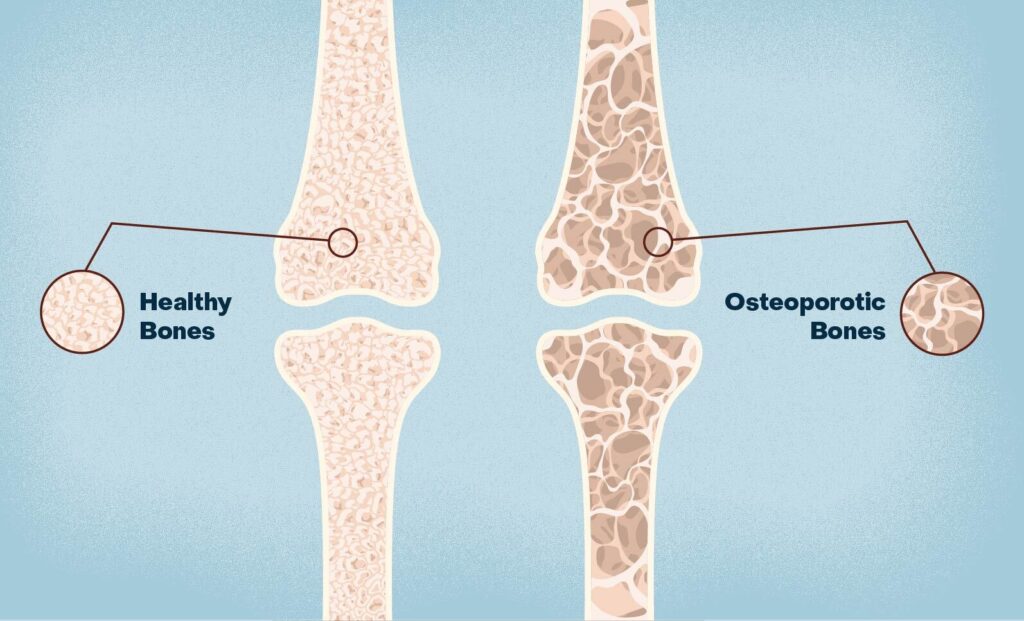
Image Credit: National Spine Health Foundation
What is Osteoporosis?
Osteoporosis is a progressive condition that leads to a reduction in bone mass and a weakening of the bone structure. As bones become thinner and more fragile, they are more likely to break – often from everyday activities that wouldn’t normally cause harm.
Fractures related to osteoporosis most commonly occur in the hip, spine, and wrist. These injuries can significantly impact mobility and quality of life, especially in older adults.
What about Osteopenia?
Before bones reach the level of fragility associated with osteoporosis, they may be classified as osteopenic – meaning bone mineral density (BMD) is lower than normal but not yet in the osteoporosis range. While osteopenia is less severe, it still increases fracture risk and is a red flag that proactive management is needed.
Why is osteoporosis called the “silent” disease?
Because there are typically no early warning signs, many people don’t know they have osteoporosis until after a break or fracture has occurred. That’s why early detection and regular screening are so important – especially if you have risk factors such as:
- Being postmenopausal
- Family history of osteoporosis
- Low body weight
- Certain medications or medical conditions
- Low calcium or vitamin D intake
How do we measure bone health?
The most common way to assess bone health is through Bone Mineral Density (BMD) testing. BMD reflects the density of minerals like calcium within your bones and is reported in:
- g/cm² (grams per square centimetre)
- T-score – compares your bone density to a healthy 30-year-old adult
- Z-score – compares your bone density to others of your age and gender
Traditionally, BMD has been measured using dual-energy X-ray absorptiometry (DXA), but a newer, radiation-free technology called Radiofrequency Echographic Multi Spectrometry (REMS) is now making waves. REMS offers safe, accurate, and convenient bone scans – suitable for regular monitoring and early detection, without any radiation exposure.
Why monitoring bone density matters
Bone health is dynamic – it changes with age, lifestyle, and health status. That’s why regular monitoring is crucial, particularly if:
- You’re entering menopause or are postmenopausal;
- You’ve had a previous fracture;
- Your medical treatment or condition affects bone health.
By checking bone density regularly, we can catch early changes, implement preventative measures, and reduce your long-term fracture risk.
Osteoporosis can be managed
While osteoporosis is serious, it’s not inevitable. With the right approach — including diet, exercise, lifestyle changes, and regular monitoring — you can protect your bones and maintain a strong, active life.